-
Finding solutions to water problems, one village at a time
April 03, 2017By Janna Fischer/3M StorytellerFinding Solutions to Water Problems
Finding Solutions to Water Problems
Finding Solutions to Water Problems
Rabia Chaudhry teaches students in Portobelo, Panama. Photos courtesy: Future Scientist
-
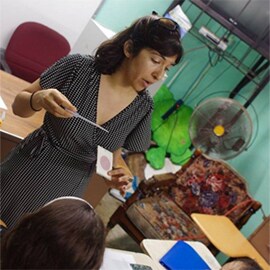
Poor water quality continues to pose a major threat to human health around the globe. In fact, one in 10 people lack access to safe water, according to Water.org. Rabia Chaudhry is well aware of these statistics. She’s a water and utilities advisor for Millennium Challenge Corporation, a U.S. government agency that provides aid to developing countries. When she was a grad student at University of California, Berkeley researching the treatment of viruses in wastewater, she was given the opportunity to co-lead a team of scientists who were determined to empower communities to find solutions to their water problems. She jumped at the chance.
Rabia and a group of eight students with backgrounds in civil, mechanical and bioengineering traveled to Portobelo, Panama, as part of a sustainable design program. They had a specific goal in mind: to significantly improve public awareness of water quality and water treatment methods in the resource-poor rural community.
This intensive program was developed by an organization called Future Scientist – a nonprofit group that provides people with the unique opportunity to design life-saving projects and put them into action. Their approach? To teach design methods and hands-on science lessons to developing communities and show them how to identify and sustainably solve their own problems.
The group focused on teaching a simple method of water quality testing for local high school students and performing community outreach to raise awareness about local water quality. The five dedicated Portobelo students helped gather water samples and tested each for contamination. Rabia’s team and the students then moved out into the community, handing out water chlorination kits and explaining a simple method of water purification using household bleach.
“From previous Future Scientist work in the community, we knew that people wanted to learn about the correct way to use bleach to disinfect their drinking water at home. We held two brief workshops at the local clinic to demonstrate the simple household water treatment method. Once news traveled, several community members also sought us out to learn about the chlorination method and take advantage of the kits.”RABIA CHAUDHRY
FUTURE SCIENTIST CO-LEADER-
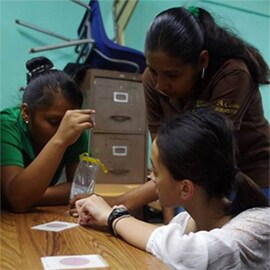
The students gathered water samples from their own homes and tested the water for coliforms and E.coli using 3M Petrifilm E.coli Plates. The paper-thin plates – typically used by the food and beverage industry to test for bacteria – were donated by the 3M Food Safety team for the Future Scientist project.
Convenient and sample ready, the plates worked well for the quick and simple water tests Rabia and her team were conducting in Panama.
Rabia’s team taught the students how to interpret the results of the tests and trained them on the basics of the significance of the outcomes. If there were no colonies present, the students knew the water was okay to drink.
“The use of 3M Petrifilm Plates was critical in demonstrating visually to the students that the water in their home was not safe – even though it looked clear and transparent. This message is typically the hardest to get across during community outreach because people do not connect diarrhea to contaminated water they ingested several hours ago. Water testing was important to create incentives for the students in being an agent of change within their homes and encourage household water treatment.”RABIA CHAUDHRY
-


